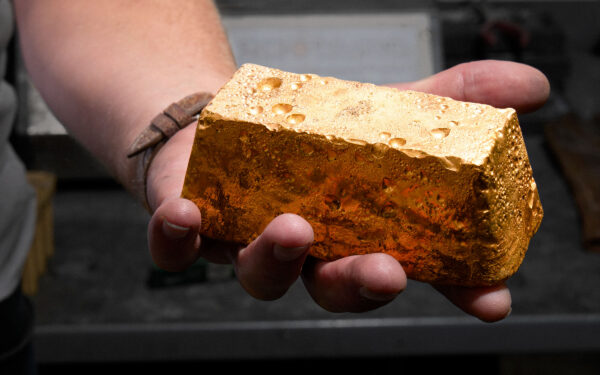
Gold has endured for millennia—not just as wealth, but as meaning, from ancient empires to a modern central banking system. Western researchers are at the forefront of understanding gold’s triple identity—element, asset and icon.
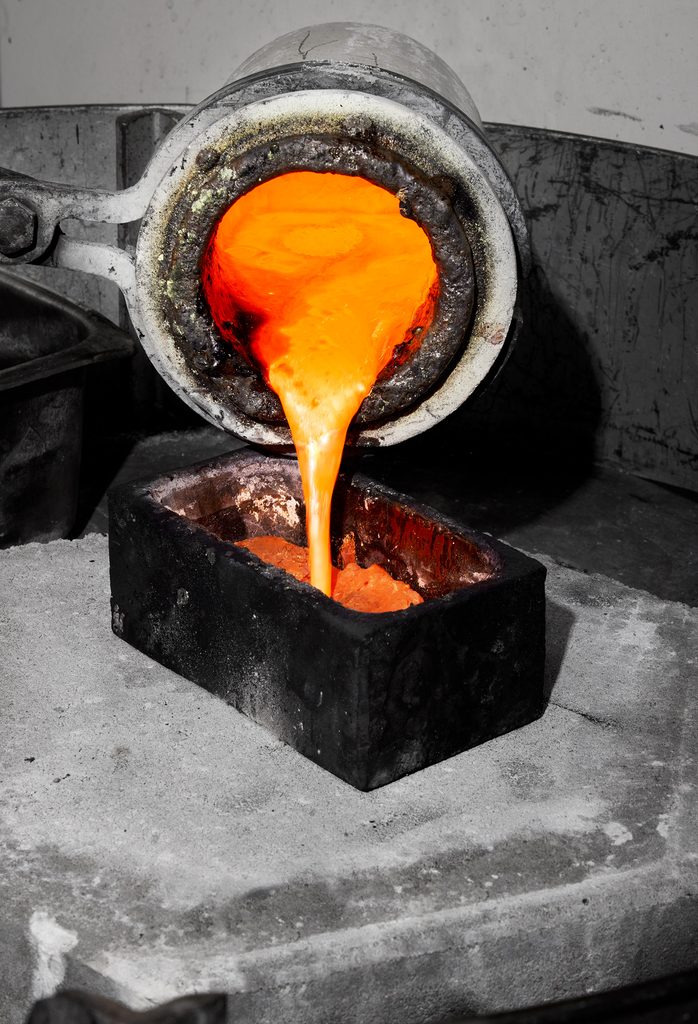
Mel Fisher’s decades-long search for gold and other lost treasures at the bottom of the Atlantic Ocean sounds like fiction. But it was real. Very real. For 16 years, the American hunted for the lost 1622 Spanish galleon Nuestra Señora de Atocha beneath choppy waters off the Florida Keys. In 1985, the search ended with one of the greatest shipwreck discoveries in history—an estimated $630-million haul of gold bars, coins, jewelry and a bounty of other riches.
Figuratively speaking, it was the mother lode. (There’ll be more on the literal meaning later.)
As a young boy, Fisher was captivated by adventure books like Robert Louis Stevenson’s Treasure Island. But what made him devote his life to a childhood obsession, investing his personal fortune, plunging himself into massive debt (and cold waters)—risking it all for sunken treasure?
“Gold’s value comes from its chemistry, stability and longevity. There’s nothing else on the planet quite like it,” says Wyatt Bain, Western’s Robert W. Hodder Chair in Economic Geology.
Simply put, gold is a metal that refuses to change. After resting, submerged and untouched, for more than 350 years, the gold Fisher and his crew uncovered in 1985 looked almost exactly as it had when it was first cast in the 1600s. Silver tarnishes. Iron rusts. And gold? Gold remains. Bain’s research takes him into the rocks and mines where gold is found, exploring not only how it forms, but what makes a deposit worth the enormous effort of extracting it.
Working with industry, government and Indigenous partners, Bain’s recent fieldwork has taken him to prospective copper-gold sites west of Kamloops, B.C., and to cobalt-platinum showings on Vancouver Island, where there may also be gold, studying the geology and geochemistry of critical mineral deposits and how they are formed. In the field, Bain brings an independent scientific perspective to mineral exploration, helping teams understand not just where valuable metals occur, but the geological processes that put them there.
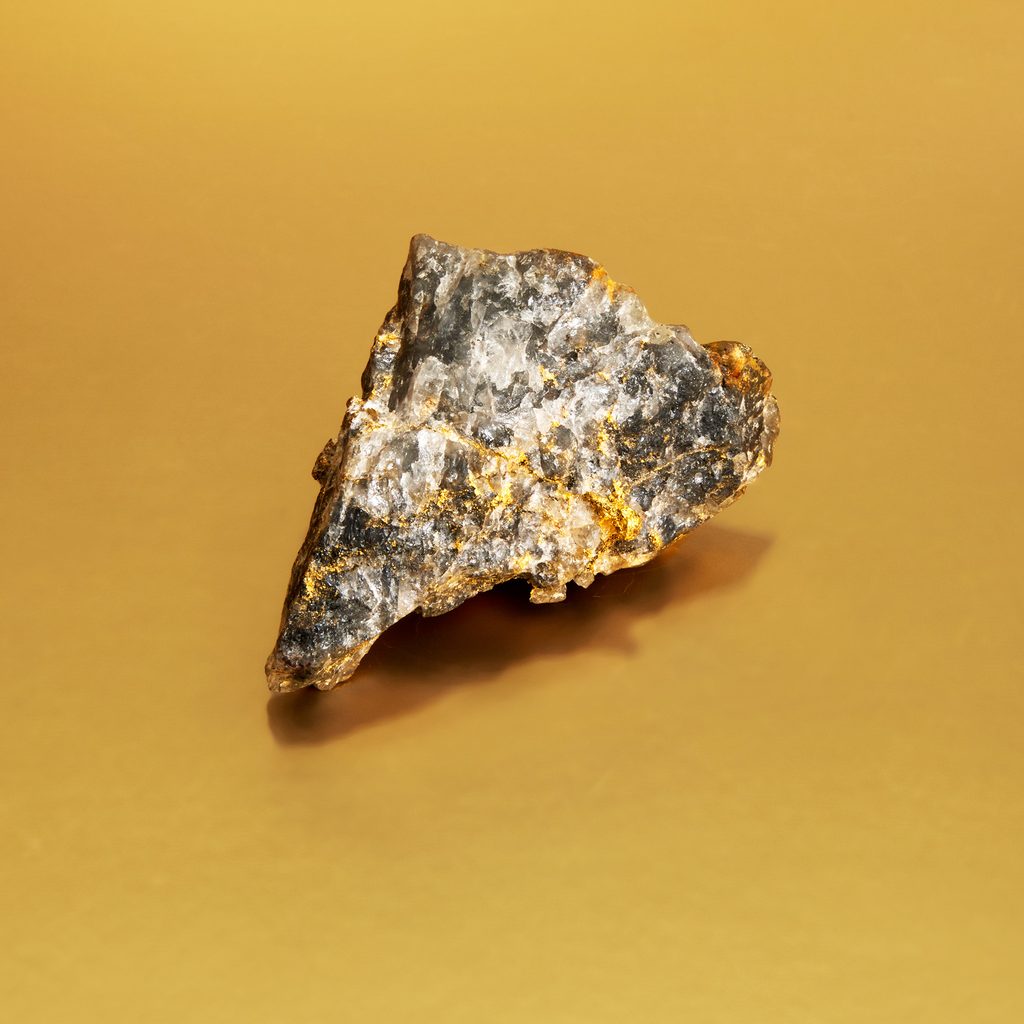
For Bain, the lesson is simple—finding gold is one thing, recovering enough of it to make a mine work is another. But after years working as a geologist and research scientist at mines and deposits in Ontario, British Columbia, Nevada, Arizona, Alaska and Chile, he knows there is still something almost primal about finding the metal itself. He has held native gold—raw and unrefined—countless times, and every time it produces the same rush of excitement. “Gold is different. Nothing really looks like gold to the human eye,” says Bain, an Earth sciences professor. “If you have to ask whether it’s gold, it’s probably not. Anyone who has gone panning and actually finds gold knows immediately. It looks like nothing else.”
Gold’s appeal becomes especially clear when times—and financial markets—are uncertain.
Ivey Business School professor Vanessa Hasse, founding director of The Rare Events Lab, explores the black swans of business—the unpredictable “unknown unknowns” that break traditional financial forecasting models, like the 2008 subprime mortgage crisis (as depicted in the 2015 film The Big Short) and the COVID-19 pandemic.
“My research deals with rare and impactful events, so I see how gold can be useful as a hedge against certain risks,” says Hasse, an expert in international business. “Gold also has this social value. It’s associated with something almost immortal because it doesn’t change. We see gold in religious contexts, pirate stories and cultural moments.”
As currencies, economies and geopolitical alliances become less predictable and more unstable, investors and central banks are turning to gold as a safe haven.
“It can hedge against things like sanctions because it isn’t anyone’s liability. A bank can fail. A bond can default. Gold simply exists. Its supply is also relatively fixed compared with currencies, which can fluctuate significantly,” says Hasse. “That makes it attractive as a longer-horizon hedge against inflation. If enough people believe gold is a stable store of value, then it maintains that value because there is a market for it.”
Hasse says she’s most interested in humanity’s long-standing obsession with gold.
“What fascinates me most about gold is the value we assign to it,” says Hasse. “Gold is malleable, so it can be shaped into bars, coins, jewelry or melted and reused. But beyond the material itself, gold carries meaning. It shows up in dowries and ceremonies because it communicates stability and value. It represents something everlasting.”
Mansa Musa. King Tut. Scrooge McDuck. Across history, myth and popular culture, gold has captivated us for millennia.
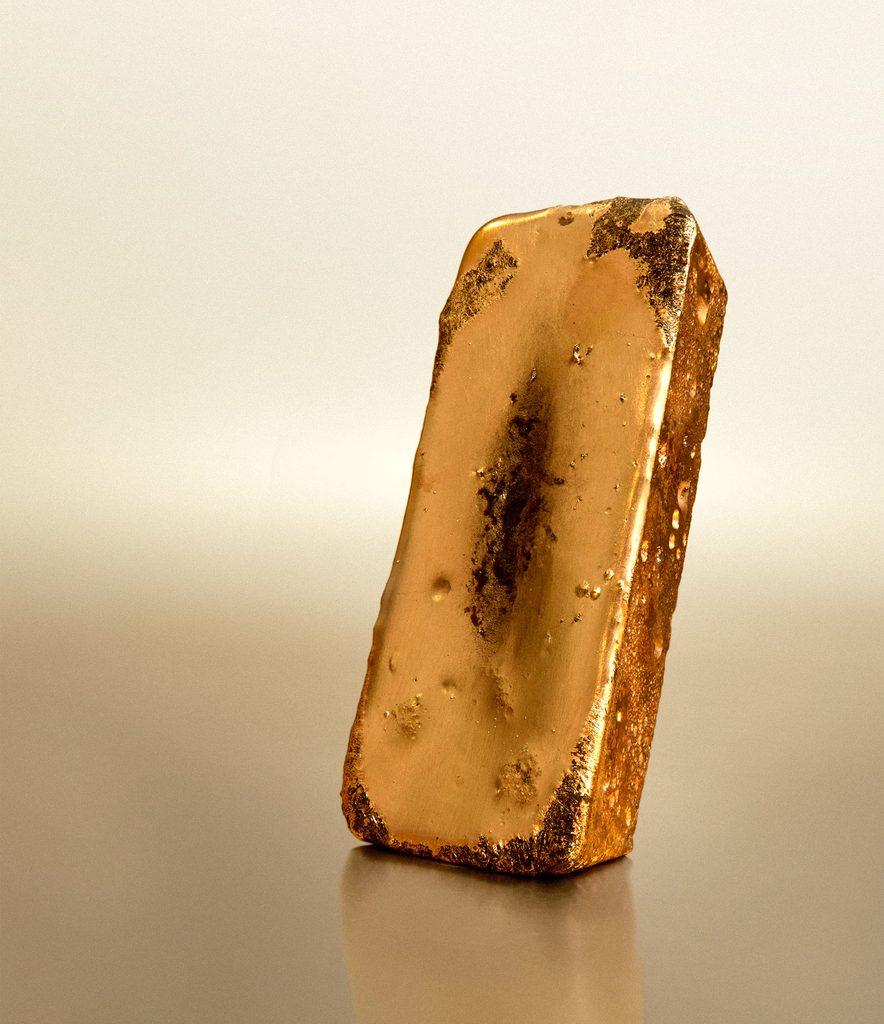
The earliest known human use of gold dates to around 4500 BC, with decorative items and beads found in the Varna Necropolis in Bulgaria. Around 3600 BC, ancient Egyptians transitioned from raw ornamentation to smelting gold for religious and other ceremonial objects.
And like the treasure found aboard the Atocha, gold found in Bulgaria and Egypt remained perfectly preserved and remarkably unchanged.
“Although gold is famously unreactive, under the right conditions it can be an extremely useful metal,” says Richard “Dick” Puddephatt, chemistry professor emeritus and fellow of the Royal Society (U.K.), an honour shared by Isaac Newton and Charles Darwin. “Over the past 20 years, we’ve discovered the right gold compounds can be remarkably effective catalysts.”
A true pioneer in the study of how noble and inert metals (elements like gold, silver and platinum) resist corrosion, oxidize and react with other chemicals, Puddephatt literally wrote the book.
The Chemistry of Gold was published in 1978 and nearly 50 years on, the 276-page tome remains a classic reference book for researchers looking to bend the bullion to their will. In the 1970s, it would cost Puddephatt about $50 per troy ounce (a specialized unit used to weigh and price precious metals) to buy gold for studies in his lab at the University of Liverpool. Today, it’s an eye-watering $5,850 per ounce.
“Due to its very nature, gold holds unlimited potential in health care and electronics,” says Puddephatt. “When I wrote my book, gold catalysis wasn’t really a field. Now there is a whole industry based on using gold catalysts to convert one chemical into another, more valuable, chemical.”
In fact, gold is so chemically stable that scientists once thought it was almost useless as a catalyst. But in the 1980s, researchers, including Puddephatt, discovered gold nanoparticles act as highly efficient catalysts for chemical reactions.
Today, nanogold catalysis and other applications of gold nanoparticles are pushing the element into new areas of science, engineering and medicine. Western Research Chair in Therapeutic Biomaterials Kibret Mequanint and his team have found specially designed gold nanoparticles can disrupt tumour cells, essentially starving them of the fuel they need to grow while having little effect on healthy cells.
The findings point to a potential new way of targeting cancer cells and add another chapter to gold’s long history in medicine and science.
“We’re still discovering entirely new things gold can do. At the nanoscale, it takes on unique properties that allow us to interact with biological systems in ways once unimaginable,” says Mequanint. “Our research shows how these unique properties could be harnessed to disrupt the energy supply of tumour cells, opening the possibility of turning one of humanity’s oldest and most treasured materials into a new tool for fighting cancer.”
That’s just one way gold is being studied at Western. Chemistry professor Yolanda Hedberg and her collaborators, including Heng-Yong Nie, senior research scientist at Surface Science Western, found gold nanoparticles also interact strongly with amino acids in the body, a discovery that could be the golden ticket for developing new biomedical applications, such as medical imaging and targeted drug treatments. The work offers another glimpse into how gold’s chemistry can become especially useful when it’s engineered at the nanoscale.
Gold’s story also extends into the microscopic world of biology. Bain’s colleague Jeremiah Shuster, an Earth sciences professor, studies how bacteria and fungi interact with gold and other metals. His research is helping scientists understand how gold is transported through the environment as rocks decompose, are dissolved and then concentrated in rivers and streams. The work could ultimately be used to recover residual gold from mine tailings (waste left behind by mining) using microbes rather than harsh chemical treatments.
For Shuster, a geomicrobiologist, gold’s story reaches even further. His research on microbes that thrive in extreme environments can help scientists understand what life might look like on other planets and how gold and other critical resources might one day be found or processed beyond Earth.
“Gold is weird. It‘s the metal we have been obsessed with since before antiquity,” says Shuster. “But gold also gives us a way to follow what’s happening in an environment. We can see where it moves, where it accumulates, but most interestingly, how microbes interact with it. And if we can understand that relationship here on Earth, we could start to recognize the kinds of clues we should be looking for on another planet. In a way, metals become part of a map that could help us find life elsewhere in the universe.”
The mother lode. The phrase was first used in California in the mid-1800s, where miners used the Spanish term veta madre (“mother vein”) to describe the massive quartz veins running through the Sierra Nevada.
The hunt for those hidden deposits—the mother lode—transformed California and made fortunes for those lucky enough to find them. By the end of the 1850s, California’s gold rush had produced an estimated US$550 million worth of gold, equivalent to roughly US$187 billion today.
Gold mining has moved far beyond the famous forty-niners armed with pans and pickaxes as megacorporations now use autonomous systems, 3D geological modelling and drones to search for deposits. But while the technology has changed, the end game has not: strike the mother lode.
“We’re still chasing the same native gold deposits and using variations of the same principles. We’re just remixing the same song with more complicated tools,” says Bain. “Gold doesn’t simply sit there waiting to be discovered anymore. The easy-to-find surface deposits are mostly gone. Sometimes it forms visible veins. More often, it hides invisibly inside minerals, like the gold trapped within pyrite at Nevada’s Carlin Trend—the second-largest gold deposit in the world.”
So the hunt for gold is not just about finding a vein. It’s about understanding what that gold is truly worth. Because gold is so valuable compared to other metals, even tiny amounts can transform the economics of an entire mine.
“A copper or zinc mine may actually survive because of the tiny amount of gold contained within it. A fraction of an ounce of gold per tonne can help pay for the entire operation,” says Bain. “Many mines are effectively gold mines at their core, even if it’s not the primary commodity being extracted.”
The challenge, then, is not whether gold exists. It almost always does, hidden in trace amounts throughout the Earth’s crust. In fact, all the gold mined throughout human history would only fill about four Olympic-sized swimming pools. The question is whether there is enough of it, concentrated in the right place, to make extraction worthwhile.
“A deposit in a politically unstable area might be incredibly rich in gold but still be difficult to develop. Companies have to consider infrastructure, social and political risk, land ownership and whether they can actually operate there,” says Bain.
And while technology has changed the calculation, it’s the fundamental chemistry that makes gold beautiful, durable and nearly eternal. That’s exactly what’s made it valuable for as long as humans have kept records.
“For most elements, the cost is related to how useful they are. Palladium, for example, used to be one of the cheaper precious metals. Now it is extremely valuable because it has many applications,” says Puddephatt.
But gold’s allure also comes with a cost.
“The responsibilities associated with mining gold are an important part of this conversation. Gold has enormous value, but extracting it comes with risks and consequences that must be taken very seriously,” says Hasse.
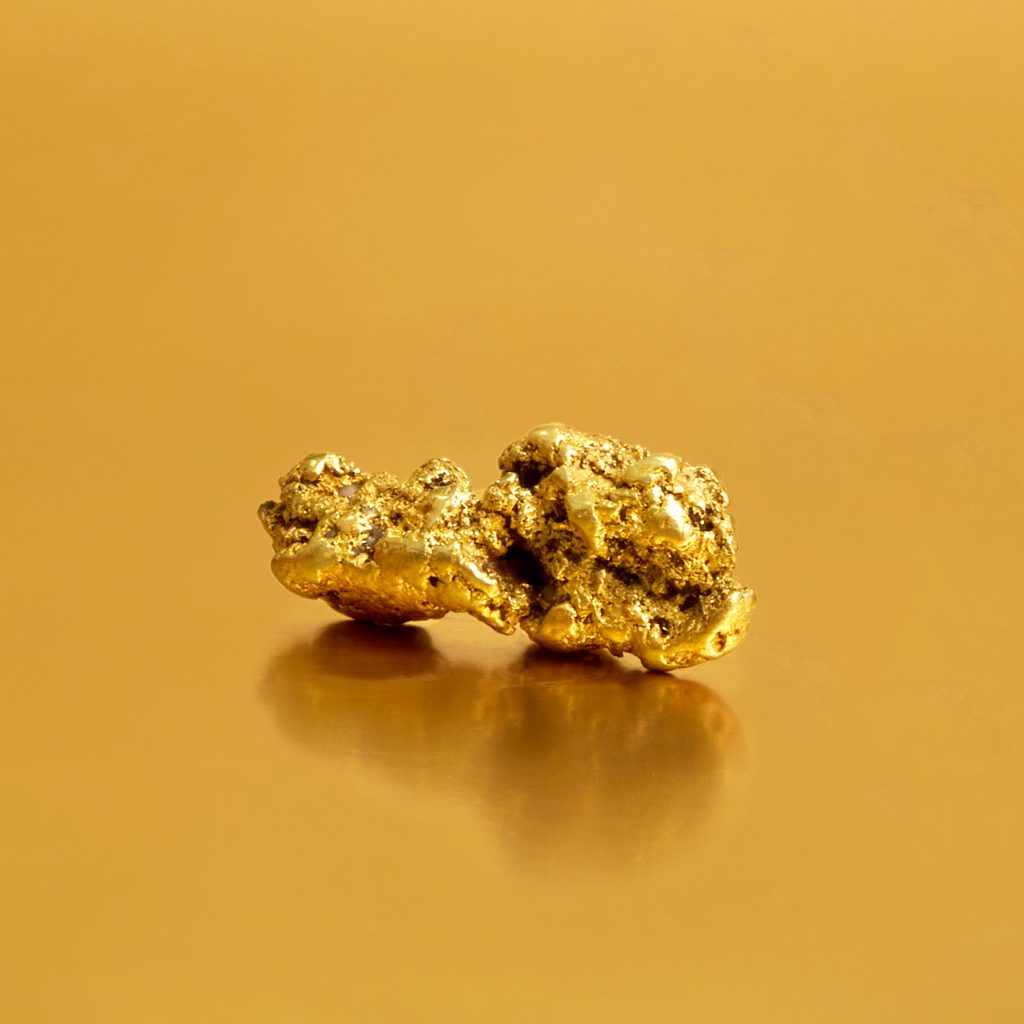
Gold’s chemistry gives it a unique and enduring value, but only when it can be concentrated and recovered economically. A deposit under the ocean floor, locked beneath the ice or stranded on the Moon may contain enormous riches, but without a practical way to extract it, the gold remains only a geological curiosity.
“Gold is beautiful, which is why people make jewelry from it, but its appeal goes much deeper,” says Puddephatt. “Gold is something people instantly recognize and you can trade it anywhere in the world.”
And lately, investment demand and trading activity have surged. Global gold investment demand rose 84 per cent in 2025 and bar and coin buying also hit a 12-year high last year.
“Anything that holds value needs to exist in a kind of Goldilocks zone. It needs to be rare enough relative to demand to have value, but not so rare that it becomes impractical or unusable,” says Hasse.
And the same qualities that make gold attractive to investors make it meaningful to families. A mining executive sees a valuable resource while a grandparent sees a watch or ring that can outlast them—something real you can touch and feel that can be passed from one generation to the next.
“Its value isn’t determined solely by chemistry,” says Hasse. “It’s also shaped by history, culture and the stories we attach to objects.”
For Hasse, gold’s value has never been about its practical uses. Its chemistry makes it unique, but human history has given it meaning. For generations, people have seen gold as a symbol of wealth, stability and permanence.
“Only a small percentage of gold is used industrially. Most gold is simply held—as jewelry, coins or something passed from grandparents to grandchildren,” says Hasse. “Its usefulness is often abstract. Gold is useful because it stores value, not necessarily because we use it to make something.”
And that is gold’s everlasting appeal. You can hold it, feel its improbable weight—Bond villain Goldfinger worshipped its divine heaviness—and pass it from one generation to the next. Bitcoin and other cryptocurrencies may be worth a fortune, albeit fleeting, but it cannot be slipped into a child’s hand or locked away in Fort Knox for safekeeping.
“Gold has a long history of stability and trust. Cryptocurrency offers different advantages, but it also comes with technological risks, scams and much greater volatility,” says Hasse.
Cryptocurrency is, in many ways, an idea. Gold is real—a physical object that humanity has projected extraordinary value upon since the early days of civilization. It exists outside governments, currencies and institutions and yet no other element, precious metal or critical resource has so consistently meant more to us than its earthly form.
For centuries, people have searched for El Dorado, the fabled city of gold. They never found it, but perhaps they didn’t need to. The legend captures the very spirit of gold—it is not valuable simply because it is rare or useful. Gold is valuable because we have spent much of human history believing it is.