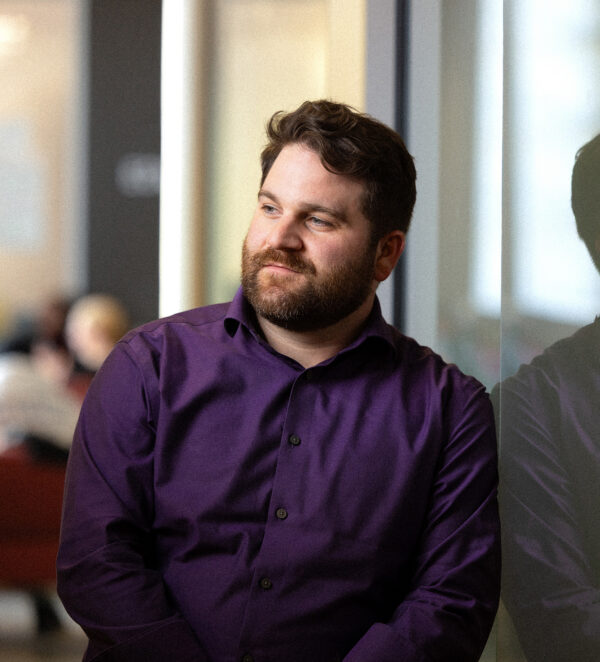
I was sitting in my basement on a Zoom call, at the height of the pandemic, while my young family waited upstairs for the verdict. In that moment, I became a newly minted PhD in health and rehabilitation sciences. It was a milestone that was never supposed to be a part of my life story. It was the moment I realized I had finally rewritten my future. Earning a PhD at Western granted me access to a life I once thought was out of reach. There I was: “Dr. Collins from now on.”
I am a second-generation Canadian on my mother’s side, the youngest child of working-class parents in an industrial city defined by its social and economic challenges during the 80s and 90s. Raised in the inner city, I was immersed in an environment where chronic substance use, financial hardship and fractured homes were the baseline reality for many families.
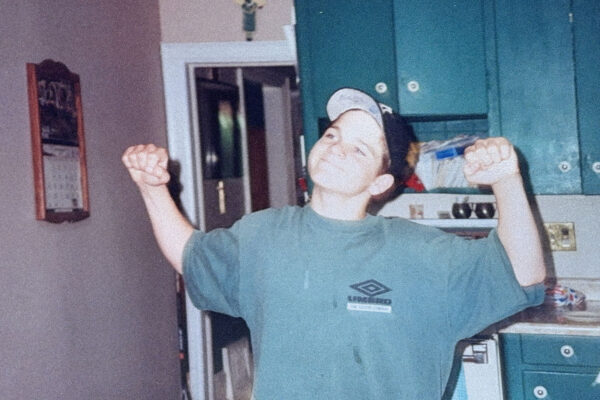
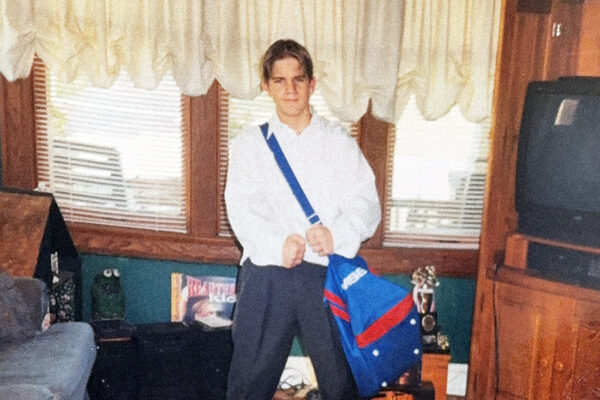
“Your son will never go to university,” my Grade 8 teacher told my mother. He shamed me for my stature and behaviour. “You will never grow in height and maturity,” he said in front of my classmates. I was the small kid, defined by what I couldn’t be: as big as most of my peers, tough enough to stop the bullying or smart enough to succeed academically. The criticisms and rejections were stinging confirmations of what others thought about me. I entered high school carrying an old duffle bag and wearing hand-me-downs, with no proof of academic excellence. But I knew deep down I had the potential to excel at something one day.
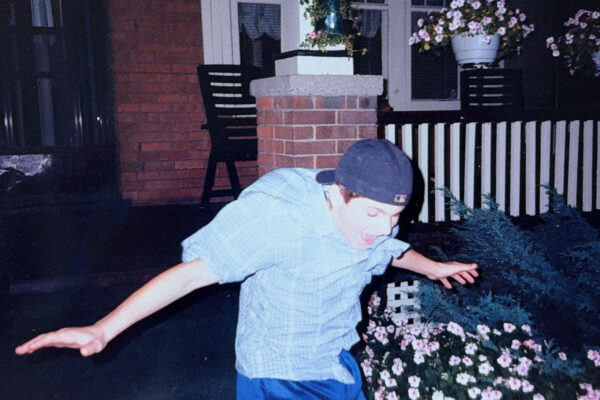
By my teens, the competitive sports I played as a child were replaced by a “party culture” spiral. I lived entirely in the moment because, in that world, there was no plan for the future. I never imagined I’d live long enough to see my 40s. I grew increasingly distant from my family, leaning into “the boys,” a gritty group of teenagers that prioritized getting high and escaping reality. Drugs weren’t just a feature of my adolescence; they were the fabric of my existence.
I didn’t have the opportunity to talk to a mental health professional about my emotional pain. I had no healthy coping strategies. Instead, I turned to cannabis and the brotherhood of the boys for my escape. But my life changed when I was introduced to a more powerful substance, cocaine. My future was in jeopardy.
Jails, institutions or death. In the backdrop of my adolescence, those weren’t just possibilities; they were the most likely outcomes. Eventually, they came calling for some of my peers. I began to witness the tragic consequences of our patterns. At the same time, I began to feel an internal spark that eventually helped me overcome the odds. That spark ignited a flame that grew slowly during years of hard labour and self-discovery.
“There’s got to be a better life than this,” my boss would tell me every morning as we drove to construction sites. I had so many unanswered questions about life, society, psychology and philosophy. I couldn’t find answers in the environments I found myself in, so I looked for an exit ramp—and that was the world of higher education.
My mom suggested I become a teacher, so I earned the pre-requisites and received a conditional acceptance into the concurrent education program at Ontario Tech University. But a week before school began, I panicked. I wasn’t confident I’d succeed in that program or have my unanswered questions addressed, so I sought out an academic advisor to explore other options. She asked me what I was interested in learning. At that time, I was fascinated with illness and disease because of my love for the medical TV drama House. Based on that, and my academic eligibility, she gave me two options: criminology or health sciences. I chose the latter.
It turned out to be one of the best decisions I’ve ever made.
Higher education gave me purpose. For the first time, I was rewarded for my intelligence and dedication to learning, a stark departure from the life I had known. For me, higher education and recovery are inseparable. The academic environment provided me with scientific theories, concepts and research findings to address my unanswered questions. It also provided me with healthy social circles and a structural safety net that helped me grow. I pursued my master’s and PhD at Western, with a deep desire to understand the various factors that push youth towards drugs. Exploring these factors forced me to investigate their influence on my own life. I didn’t tip-toe, I jumped in with both feet, eventually sharing my lived experiences through my dissertation, Cocaine Confessions. The self-reflection offered a deeper understanding of my past behaviours and the weight of their consequences. By writing my story, I was able to reconcile my past and use my “inside-out” perspective to address the stigma and shame that so often surrounds addiction. I wanted to show that recovery and growth are possible, even for those who’ve been counted out.
Today, as an assistant professor in the School of Health Studies at Western, I don’t just teach theory; I teach the human architecture of resilience. From mental health to stress to drug policy, the lessons I teach aren’t simply grounded in textbook knowledge; they’re shaped by the reality of my own life. I can lecture about the weight of depression, anxiety and the grip of addiction with authenticity only lived experience can provide. I see the impact when students approach me after class to share how my stories resonated with them, touched their own lives and brought a new perspective to their challenges. Knowing I’m making a difference by showing up authentically has been the most meaningful reward of my career.
I recognize now my trajectory was not fueled by individual grit alone. Stable housing, support from friends, family and mentors and educational grants allowed me to pursue higher education with confidence, security and safety. Those same anchors were denied to so many of my peers.
My story shows that potential is often waiting, untapped, and that recovery and growth are possible. I hold my “Dr. Collins from now on” experience close to my heart because it’s a striking reminder of how far I’ve come. I had the support to build a positive legacy out of the wreckage of my past—and now it’s my turn to pay that forward.