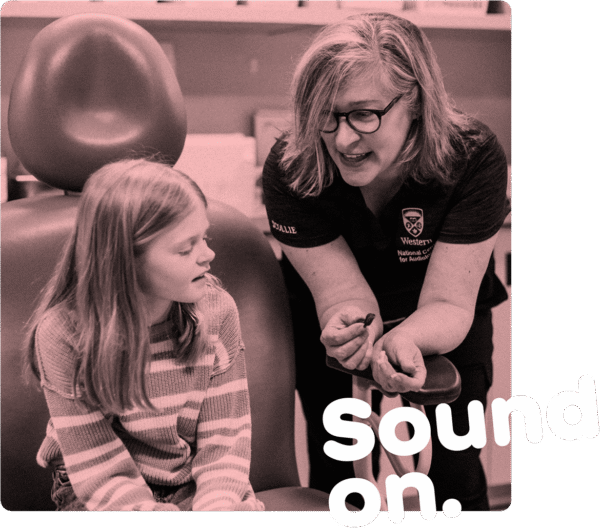
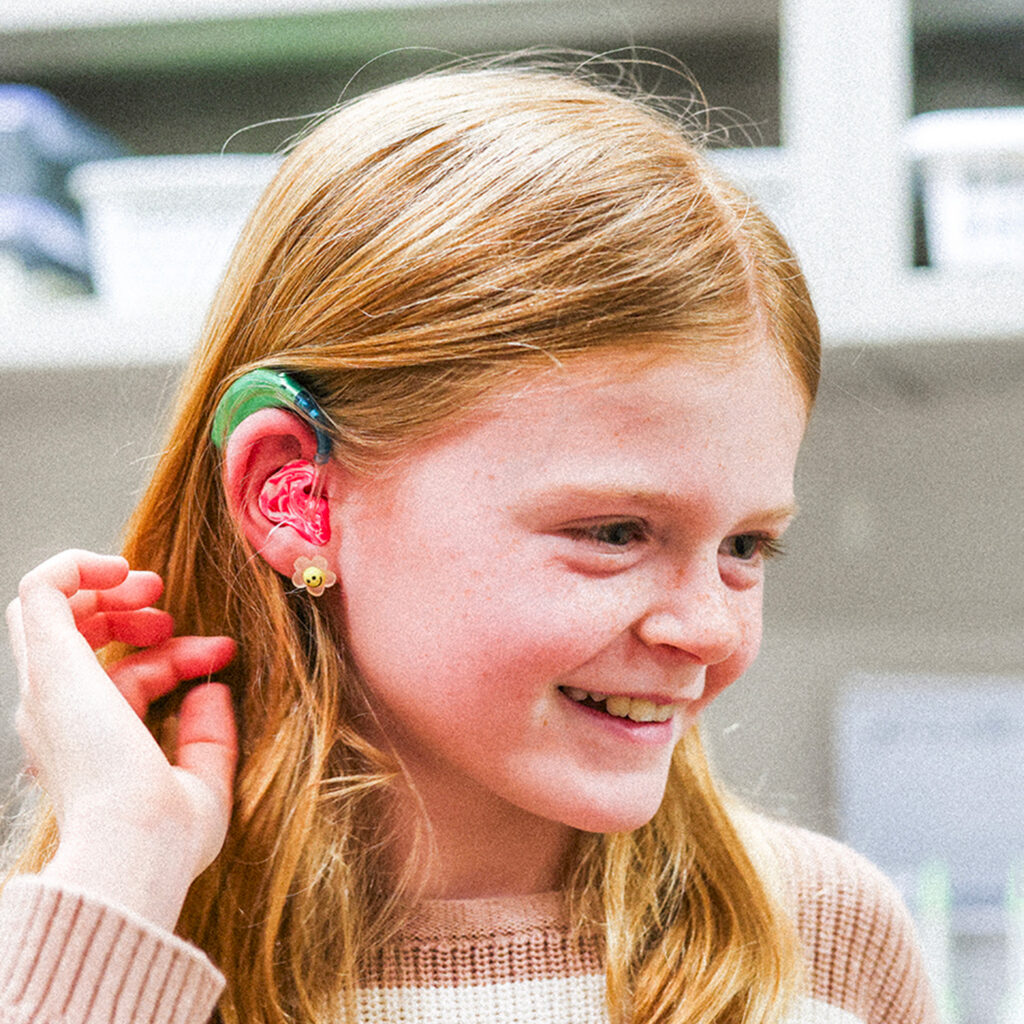
Hearing aids give millions of children access to sound. Customized earmolds are essential to connect the technology to the ear canal and hold hearing aids in place. But children outgrow their earmolds rapidly—sometimes monthly—during their first year of life. This means repeated clinic visits for silicone impressions of their ears, an uncomfortable process.
Jennifer Gould’s daughter Charlotte was diagnosed with hearing loss as a baby. The extra earmold appointments came on top of other medical visits to rule out any other underlying health issues. “The nature of the earmold process included more scheduling, waiting, poking and prodding,” says Gould. An otherwise happy baby, without well-fitting earmolds, Charlotte was quicker to upset.
Waiting for new earmolds can take weeks. That poses a significant risk for infants, because their rapid growth can interrupt hearing aid use when it’s most needed—during critical periods for language and development.
Alongside Western engineering professors Soodeh Nikan and Joshua Pearce, Susan Scollie, director of the National Centre for Audiology, is tackling the problem through the ALLEars project, using AI and 3D-printing to develop affordable, digital solutions for predicting ear growth.
“We’re bringing a completely fresh and high-tech approach to an old problem: kids outgrowing their earmolds faster than we can make them,” says Scollie.
Using AI, investigators can predict how a child’s ear will grow over time, so earmolds can be made in advance using 3D-printing technologies. Scollie calls the first-of-its kind project a “once-in-a-lifetime opportunity where we expand beyond the confines of what audiologists can do, collaborating with engineering and computer science colleagues who can apply their expertise to help drive this solution.”
In collaboration with Boys Town National Research Hospital in Omaha, Nebraska, the project has attracted $4.4 million (USD) in funding from the Oberkotter Foundation—and praise from parents like Gould. “Had this technology existed when Charlotte was younger, we would have had more time to enjoy the sounds of birds, words and music—all the things her hearing aid allows her to experience.”