At 75, Shirley Little has found purpose in bringing people together.
She’s the driving force behind a growing circle of older adults who meet regularly for conversation, coffee and connection.
“It’s so important to stay active, for your physical and mental health,” says Little, who helped organize a bimonthly Coffee Talk for older adults at local cafés in Old East Village in London, Ont., with the support of Western researcher Carri Hand and postdoctoral scholar Priscila Goncalves.
An occupational therapy professor, Hand explores ways neighbourhoods can support social connectedness and age-inclusive communities, by collaborating with local organizations and engaging older adults like Little as co-researchers. Together, they look for opportunities to develop innovative, sustainable strategies that enhance daily life for older adults.
Connecting with others brings meaning and a sense of belonging. It also fends off loneliness—one of the greatest threats to aging well, ahead of obesity and physical inactivity. Some studies show lacking social connections can increase the risk of premature death as much as smoking 15 cigarettes a day. But the stigma of loneliness makes it difficult to address. “Ask people if they’re lonely and they may not admit it,” Hand says. “Ask them if they’d like to do more activities, and as many as 40 per cent will say ‘yes.’”
Ask them if they’d like to do more activities, and as many as 40 per cent will say ‘yes.’
Carri Hand
Western occupational therapy professor
↗
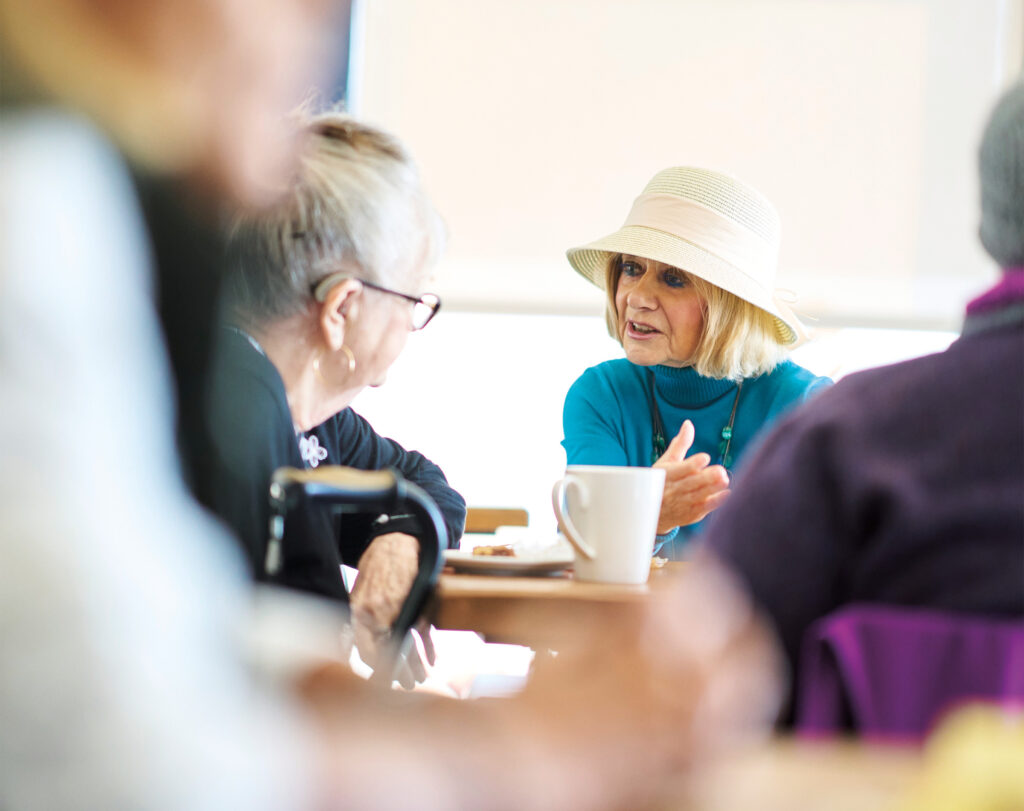
Shirley Little, 75 (pictured right), helped organize bimonthly Coffee Talks for older adults in London, Ont., with support from Western researchers. Photo By Geoff Robins.
By supporting older adults to take the lead, Hand’s team is seeing signs of success. “The majority of us never knew each other before Coffee Talk,” Little says. “People have become good friends.”
Through a partnership with the City of London and the London Intercommunity Health Centre, Coffee Talk has expanded to include guest speakers, outings to local museums, exercise and pottery classes. Hand hopes the success of the program will inspire other communities and organizations to identify similar opportunities for social connection. An informal social network has also grown, promoting an exchange of information and improved well-being.
“One lady lived in a damp basement apartment until she learned about a better apartment through the group,” Little says. “Another woman, who never used to get out, is now fixing her hair and dressing up for coffee. Her son says she has a busier social life than he does.”
Across town, in London’s Cherryhill neighbourhood, Pauline Salisbury recalls how she was once reticent to take the city bus. “I’m a country girl,” Salisbury says, “I didn’t know where to get on, get off or how to put the ticket in.”
A ‘bus training’ exercise led by Hand’s team gave Salisbury, 75, the confidence to venture out with a friend to the market downtown or to the mall. “If you don’t know where to get off, you just have to ask,” she says.
Empowering older adults to create change that enhances their lives and communities “is one thing I love seeing in my work,” Hand says.
Shirley Little
One woman who never used to get out is now fixing her hair and dressing up for coffee. Her son says she has a busier social life than he does.
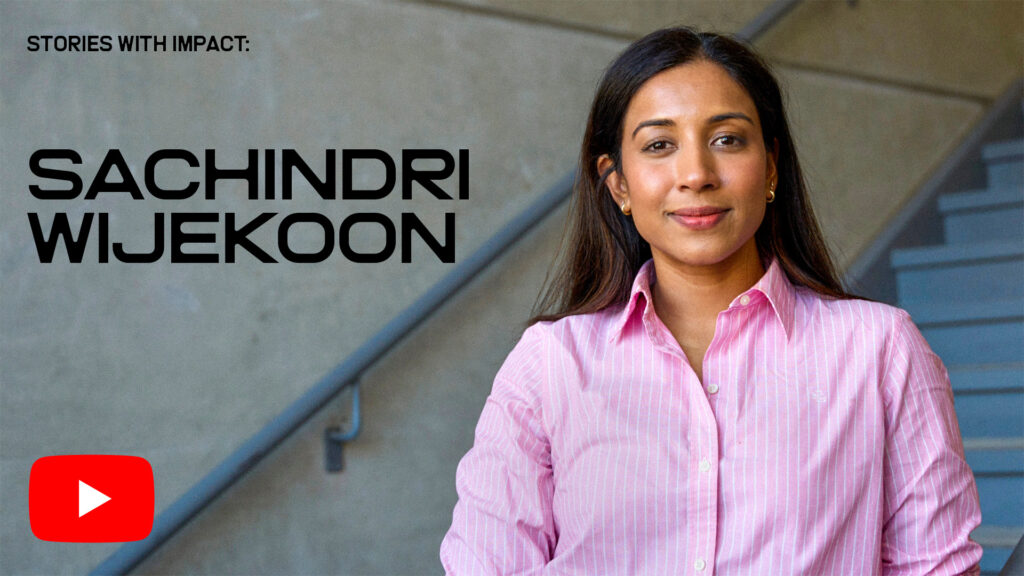
Aging well often means aging in place, in a familiar environment. But what of those aging out of place, in a foreign land? That’s one question driving Sachindri Wijekoon’s research. Wijekoon, a Western professor of occupational therapy, studies the intricate relationship between aging, social marginalization and participation.
“Imagine a challenge like accessing transportation and not knowing the language, the culture,” she says.
Wijekoon first witnessed the struggles later-life immigrants face when her grandparents left their homeland of Sri Lanka to join her family in Canada. Far from their lifelong neighbours and friends, they became isolated. “My parents and I would head to work and school each morning, leaving them sitting at the kitchen table. When we returned in the evening, they were rooted in the same spot.”
When her grandparents chose to return home to Sri Lanka and their close-knit community, their experience inspired Wijekoon’s life’s work.
For communities to be truly inclusive and set the foundation for connections, Wijekoon says we must rethink the current “one-size-fits-all” approach.
“We tend to treat older adults as homogenous groups, when we should be taking an intersectional approach that ensures everyone has access to activities and services that are meaningful to them.”
Like Hand, Wijekoon conducts participatory action research, collaborating with marginalized older adults, using their insights, needs, experiences and priorities to guide her research questions and advance change.
She’s currently working with members of Toronto’s South Asian community to identify barriers and understand their needs.
“They’re so happy to be asked and eager to participate. They want to improve conditions and give back to their communities.”
By learning about their challenges, Wijekoon aims to help create equitable opportunities and equal access to services.
“If we address the needs of the most vulnerable, we make communities better and more inclusive for everyone.”