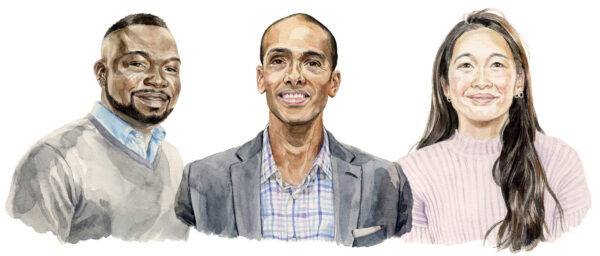
Western has invested more than $100 million to match donor gifts creating new research chairs. These senior academic positions support faculty members conducting leading-edge research. Meet three inaugural chairholders tackling important questions in literature, medicine and artificial intelligence.
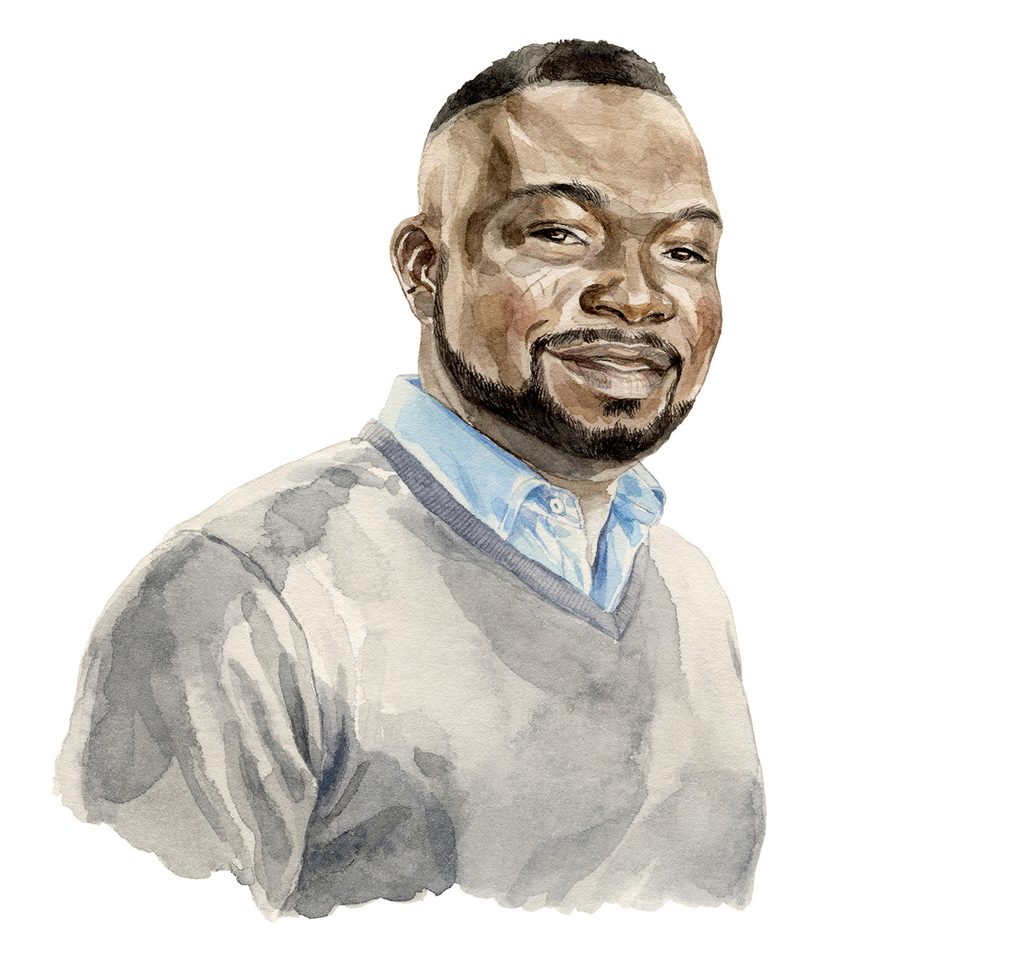
Sakiru Adebayo
James and Eva Good Chair in English Literature
What is your research focus?
I study how literature helps us understand conflicted pasts, with a focus on Africa and the African diaspora. I look at the work of writers who moved to Canada 10 or 20 years ago and are now writing about themselves as people from elsewhere, but also part of this place. My research merges memory and literature to better understand how people make sense of where they came from and where they belong.
What was your inspiration?
It started more than 10 years ago when I lost my father. I couldn’t process the death. Even a year later, after his burial, I was struggling. I read a Freud essay on mourning and melancholy, which brought me to memory. How do we remember things, especially tragic events? I am a literary scholar, so I turn to literature to make sense of the loss. As human beings, we are shaped by our memories.
What’s the impact of this work?
It’s important for us to remember, as a collective, so we don’t repeat mistakes of the past and to fashion a just, livable future. There is official repression of memory—what memory scholars call ‘mnemocide.’ After many atrocities in Africa—civil conflicts, famine, genocide—there is a culture of silence, or people are just too traumatized to talk about it. I investigate how literature intervenes.
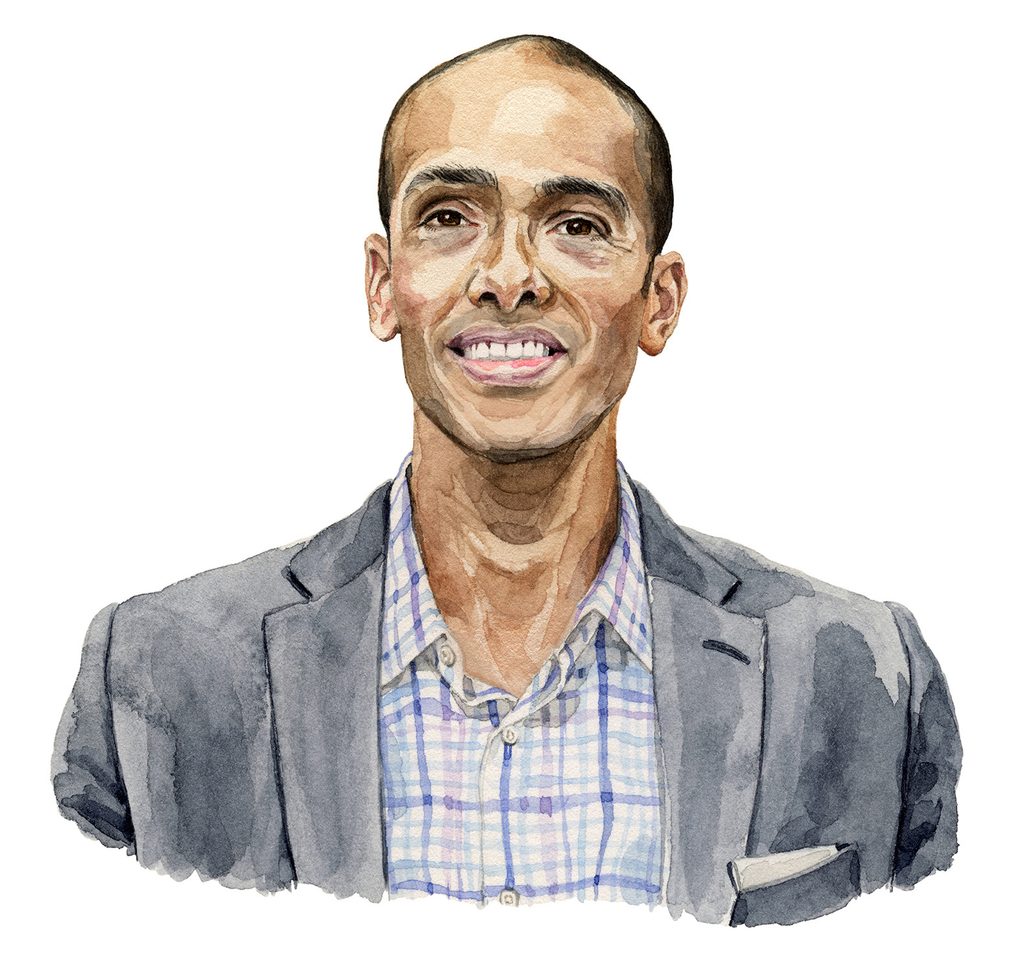
Dr. Samuel Asfaha
Verspeeten Chair in Translational Cancer Research
What is your research focus?
My specialty is gastroenterology. The intestine and colon are organs that renew rapidly, continuously, just like skin. Every four to five days, we turn over our gut lining. In my lab, we try to figure out what makes those tissue stem cells give rise to new cells. By better understanding these processes, we may be able to enhance the gut’s ability to regenerate after injury. We want to determine how cells within the gut lining contribute to health and disease.
What projects are you most excited about?
The discovery that stem cells can be used to grow tissues in a dish has been really powerful. We generate those organoids—a fully functioning mini gut in a dish—from patients who are healthy or have colorectal cancer. We can regrow a tumour and then treat it to see the response. We can also identify cells that are resistant and test alternatives to treat the tumour.
What keeps you motivated?
In the last decade we’ve seen so many new therapies, but unfortunately we’re still not able to successfully treat all patients. With inflammatory bowel disease, some show a lack of response to treatments, or there’s a response initially, but then it goes away. Same with cancer — there are great medical and surgical options for patients who get diagnosed early, but for those diagnosed later, there’s a major gap. It really encourages us to identify better ways to predict response and develop new therapies.
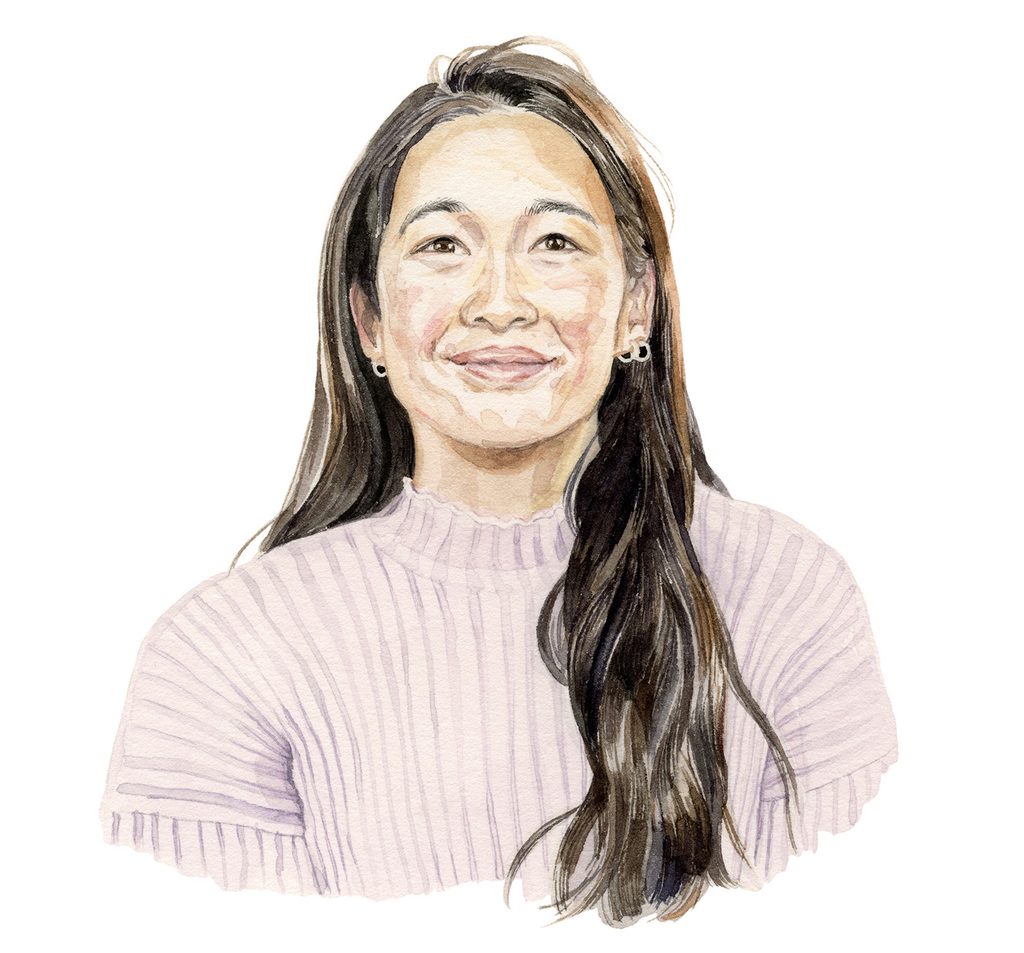
Alice Huang
Duncanson Chair in Ethics and Technology
What is your research focus?
I look at the intersection of computer science and philosophy, including ethical issues related to AI and machine learning. Large language models, like ChatGPT, made AI so much more accessible—that was the turning point. It’s quite polarized now. Some think ‘this is going to save our lives, we should use it everywhere’ and others are really worried about giving so much power to big tech companies and becoming reliant on it.
Where do you fall on that spectrum?
The problems we’re facing today are real and we need to take them seriously, but we’ve overcome difficult challenges before and we’re better positioned than we were five years ago. Many of the problems are exacerbated versions of existing issues in our society that we’re not dealing with very well. The productive approach is to think about ways to come together. Philosophers might recommend solutions that aren’t technically feasible, or computer scientists might define concepts too narrowly in a mathematical way, without thinking of the social impact. The best solutions often come from combining expertise across fields.
What’s next for you?
I’m starting research on polarization within social media and how we might leverage algorithms to mitigate that. That’s fundamental, because the way opinions are shifting due to misinformation is affecting our ability to solve problems—including problems related to AI. We want to figure out what we need to do technologically, and through education, to build reasoning capacity that’s resilient to misinformation.