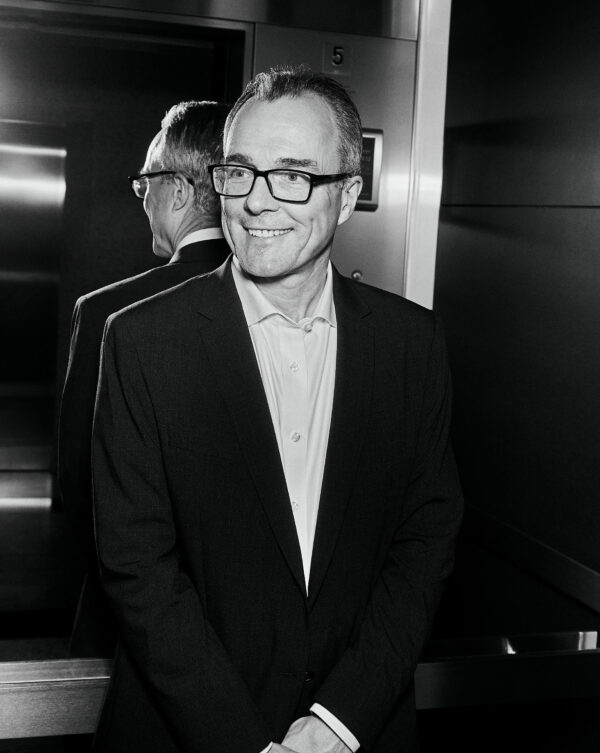
Julian Birkinshaw, MBA’91, PhD’95, has come full circle. After 25 years at London Business School in the U.K.—most recently as vice dean—the internationally respected scholar and author is back at Western as dean of Ivey Business School, officially stepping into the role on Aug. 1, 2024.
A sought-after thought leader in innovation, organizational resilience, strategic agility and digital transformation, Birkinshaw has advised some of the world’s top companies on how to adapt and thrive. His latest book, Resurgent: How Established Companies Can Fight Back and Thrive in an Age of Digital Transformation, comes out this July, offering fresh insights into the rapidly evolving business landscape.
Patchen Barss sat down with Birkinshaw to talk about how his research and experience play into his vision for the school.
It was a big move for you to come to Ivey from England. Why now and why here?
The “why here” is easy. I’m an Ivey graduate, not just once, but twice. Even when I was at London Business School, my values and beliefs about what makes a good business school were rooted in what I learned at Ivey. I get this place.
The “why now” is also very simple. We’ve got three kids, and the youngest just went off to university. For the first time in 25 years, my wife and I were free to imagine what we wanted to do next. She grew up in Etobicoke, Ont., and her father still lives there. I am also excited about the opportunity to make a difference—to shape Ivey’s future and to help it realize its potential on the world stage. So there were personal and professional reasons why this made sense.
Tell me more about the values and beliefs you absorbed at Ivey as a student.
There are thousands of business schools in the world and hundreds of good ones. Ivey is one of a small handful that deeply believes in the case method as the best way to build expertise, insight and reflection amongst students. It puzzles me why more schools don’t believe in that demonstrably successful model. When I came back after 30 years away, I was delighted to see that the focus on top-notch teaching and the case method is still going strong.
What’s special about the case-method approach?
The traditional teaching model at universities is a professor standing at the front of the class, lecturing to students and assigning readings. The case method flips that on its head. You assign the readings and a case study in advance. The case study might be about a company, CEO, financial officer or a line manager with an operational issue. The study provides a wealth of detail and data for a situation requiring a business decision. The instructor encourages students to discuss how what they learned before class can be applied to the case, drawing out their ideas through conversation. That’s just a much richer way of learning than reading an example in a textbook.
Of course, you do need some lectures. But in the vast majority of classes at Ivey, students put themselves in someone else’s shoes and consider how they would solve a problem.
You were quoted recently in the Financial Times about the opportunity and responsibility business schools have given the current political situation in the United States. Can you talk about that?
In a world where Donald Trump is president, the U.S. is now both more inward focused and more uncertain and unstable. That opens the door for other countries to attract investment, people and opportunities.
Large numbers of students from Asia—China and India, foremost—are craving higher education in English. While the Canadian government has set clear limits on overall international student intake, we still have room to attract top-tier talent—students who can thrive academically and contribute meaningfully to Canada.
Given these shifts, Ivey has a unique opportunity to strengthen its global reputation by expanding its international reach and impact.
What might that look like? How do you build the Ivey profile?
We start with what we’ve already got. Obviously, anyone who’s an Ivey grad or people who’ve hired Ivey grads have a pretty positive view. Beyond those small pockets, Ivey is best known in the business world for its case studies. After Harvard, we’re the second-biggest publisher of case studies in the world.
I want Ivey to become the most accessible provider of experiential business education in the world. To achieve that goal, we’re focusing on several key areas. First, we want to continue to grow Ivey Publishing’s global presence. We also want to expand on the business education initiatives we already have in Hong Kong, the Middle East and Europe while strengthening our partnerships with other schools around the world. We’re already part of a network of 33 of the world’s top business schools, where we have exchange agreements and plan to do joint case publishing. Another priority is attracting more international students to our master’s programs and get them placed outside Canada.
This may sound grandiose but bear with me. I want to take Ivey to the world. We already have initiatives where we send students to emerging economies in Africa, Eastern Europe and Asia as part of their education. We also provide Ivey case studies at no cost to business schools in the poorest 39 countries in the world, including Kenya, Bangladesh and Nigeria.
Our greatest contribution isn’t bringing students to Ivey; it’s actually bringing Ivey to the world through our leadership in case-method teaching methodology.
How might emerging technologies affect the Ivey approach to experiential learning?
People get very nervous when you start talking about how AI is going to change the style of learning that we know and love. I don’t want us to go down the route of Coursera or the Khan Academy and just say all learning will be asynchronous, prepackaged videos. Online content must create entry points to give people anywhere in the world exposure to the Ivey learning experience. It’s a way of building our exposure around the world so people make the investment to come here. We just hired someone to lead the development of Ivey Online—to help us take our offerings to the world.
We’re also actively exploring new AI-based technologies to complement case-based learning, to help our students get up to speed before they come to class and give high-quality feedback after class.
We’ve already touched on two major disruptions: U.S. politics and artificial intelligence. Do these kinds of shifts prompt you to rethink concepts like resilience and adaptation?
It feels like external threats are increasing in speed and magnitude. Certainly, since the pandemic, I’ve been more acutely aware of the challenges. These things play out over very different timelines: COVID-19 hit us in a matter of weeks; a digital revolution takes place over years; climate change is measured in decades. You’ve always got to keep in mind that you’re adapting in the moment but also laying the groundwork for changes that unfold over time.
I’m now trying to apply the advice I’ve given to others here at Ivey. Be hyper-vigilant about change, but don’t overreact. First movers don’t always have the advantage. Google was not the first search engine. Facebook was not the first social media platform. I want us to experiment, but also be cautious before we jump in.
Second, make sure you have a clear sense of overall direction, but be flexible about how you get there. There can be many pathways you might follow to achieve your goals.
Third, diversify on supply and demand sides, and avoid putting all our eggs in a single basket. For instance, we’ve got to diversify the sources of our students. Like many business schools, we’re overly reliant on certain markets, and any geopolitical shift could have a huge impact.
Fourth, run a tight ship. This is nothing clever—it just means making sure your costs are under control, and you have a robust balance sheet or war chest.
Many people have a perception of what a business school is and who it’s for. Do you have to work on that perception to broaden and diversify Ivey’s appeal?
Your point is well taken that business schools have traditionally trained up people who have certain levels of—I’m going to use a word I’m cautious about—privilege. I want to turn that the other way around. Is accessibility the opposite of privilege? Not exactly, but roughly. Business schools around the world still cater to a very small slice of people at the top of the pyramid. A business degree is expensive—over $100,000 is the norm for a top-level MBA. Lots of scholarships are available, but you’ve still got to fill out the application form—you’ve got to believe it’s something that could be for you. We have to continue to work on finding students on the basis of potential, not privilege—to help us raise the quality of the student body year after year. That means reaching people who might not otherwise have applied.
Ivey is embedded within a university. What value do you think it has for Western students in other faculties?
We have many dual degrees with other faculties. On the order of 385 students graduate each year with a joint “Ivey Plus” degree. Ivey-Plus-Engineering, Ivey-Plus-Medicine and so on. Those students get great jobs. (Western President) Alan Shepard also created an initiative to launch certificate programs for students from across programs. A music or sociology student can now get certificates in entrepreneurship or leadership, “powered by Ivey.” That’s good for Ivey and good for Western and good for graduates across many disciplines who take that robust education and experience into their careers.
When you look at the evolution of business schools, do you see this as the start of a transformation, or as a culmination of factors that have been building for a while?
Business schools are adapting to a world where addressing grand challenges or wicked problems requires a level of cross-disciplinary collaboration that hasn’t been needed before. Sustainable development, reducing poverty, tackling climate change—you can’t start on any of those without bringing together people from across the university.
We’re in the thick of it. We’re far from the finish line when it comes to finding ways to integrate business thinking more deeply into how NGOs, governments and higher education institutions approach solving complex problems. That’s why it’s crucial to equip future business leaders with the skills to navigate and drive solutions. And for Ivey, it’s important to strengthen collaborations with faculties across the university, bringing different perspectives together to make a bigger impact.
We’ve been talking about global events and major trends. But as you’ve just taken the helm at Ivey, what are your personal goals for what you hope to accomplish as dean?
I’m clear on the measure of success for Ivey five or 10 years from now: continue to be the best business school in Canada and be recognized as one of the top business schools in the world.
There are a bunch of ways to bring that to life, but the simplest is to be a brand that people—faculty, students, alumni, recruiters and other business schools—want to be associated with. Everything I’m doing, everything we’re doing, is in service of building Ivey’s brand.
We look at rankings as one piece of data. Equally important: Do faculty from other business schools want to work here? Are high-quality students from around the world eager to study here? Do leading organizations and businesses want to hire our students? These are the types of measures we’re focusing on.
What’s something people might not realize about Ivey?
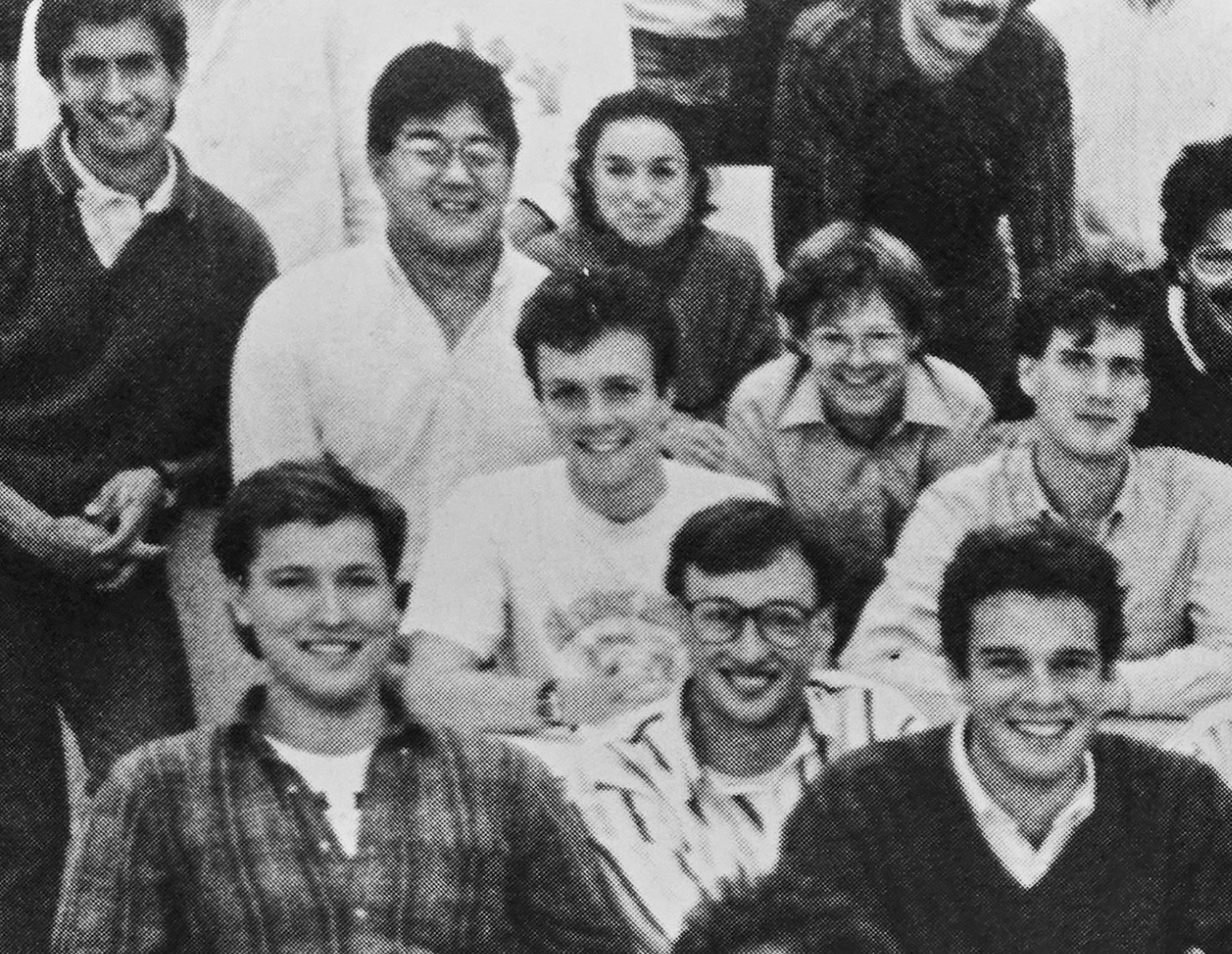
The biggest positive surprise coming here was the engaged, enthusiastic alumni base. This might sound self-serving, but there’s something really unique and special about Ivey alumni. Maybe it’s because they spend two or four years here in London, very close to each other, doing very intensive learning. I often meet alumni who still go on holiday with the people they sat next to in class when they were 19 years old. I recently met a group of five alumni who were in the same class in 1987, and their surnames all began with S, so they literally sat next to each other. They are still best friends 40 years later.
Ivey has a really strong alumni community made up of individuals who have a true passion for the Ivey experience. I’m so impressed with the many ways our alumni stay connected and give back to the school—whether financially, supporting students and curriculum and, most importantly, supporting each other.
Hear more from Julian on Ivey as he sits down with President Alan Shepard below:
↓