It’s more than 6,000 kilometres away from their usual archaeology class.
Western students traded lecture halls and bookbags for a six-week field project on the Central Coast of Peru, where they analyzed fardos—mummy bundles—to learn more about those who lived in Puruchuco, located just east of Lima, between AD 1470 and 1532.
“This project is the opportunity of a lifetime. Being able to see the process of field research firsthand has been invaluable,” says Avery Dowling, a fourth-year archaeology student and recipient of the Bogal-Szot Undergraduate Anthropology Fieldwork Award. “It gave me the chance to learn not only about archaeology, but also about academic research.”
Fardos are burial bundles containing individuals’ remains, encased in textiles, alongside funeral goods such as decorative or memorial pieces. The sandy conditions in which they were buried worked to preserve remains, along with the wrapping materials that drew fluids away from the body. Fardos are microcosms of a person’s life and culture, and they are studied for evidence on everything from pilgrimage patterns to health.
Western professor and bioarchaeologist Andrew Nelson has worked with Peruvian collaborators on this project since 2018, studying more than 150 fardos and creating an innovative mobile X-ray process to gather data and gauge whether the mummy is a fit for further CT scanning.
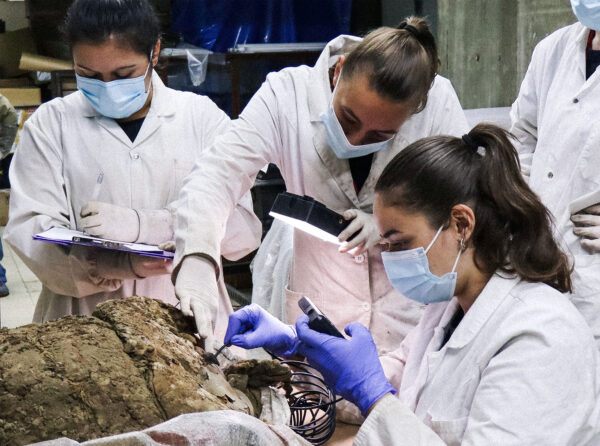
This summer, Nelson returned to the basement of Peru’s Ministry of Culture building, where the Puruchuco fardos are stored, bringing a team of students for a unique hands-on research opportunity.
While fardos are typically studied by unwrapping the textiles encasing the mummy, that process causes irreversible damage and sacrifices future analysis. Nelson’s team uses X-rays, CT scans and minimally invasive sampling to preserve the fardos while gathering valuable information about their cultural and biological characteristics, context and history.