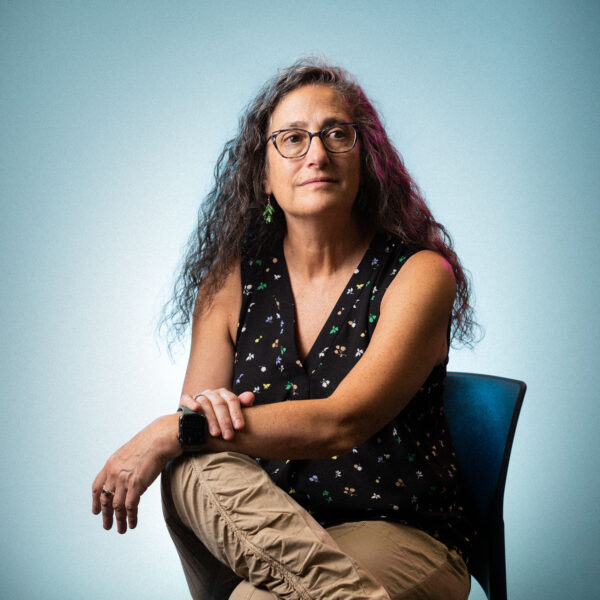
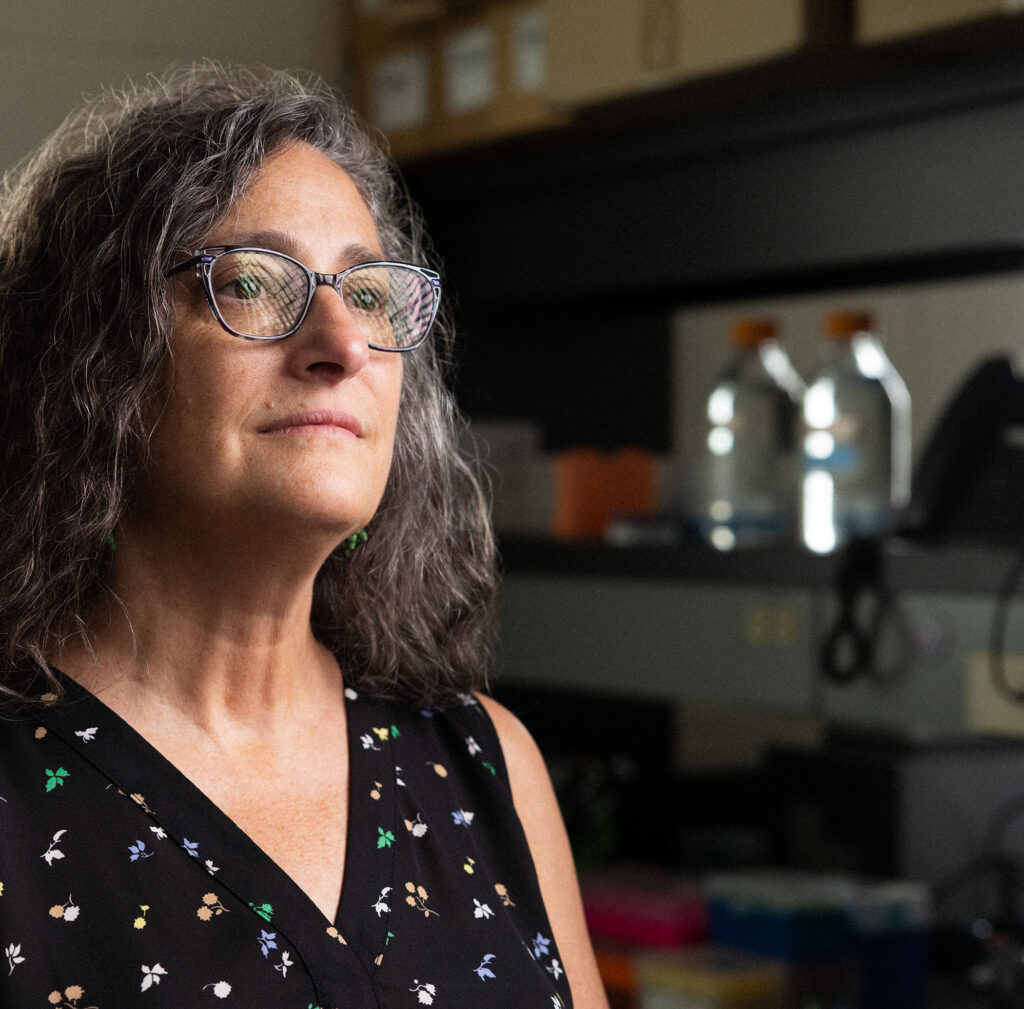
Since joining Western in 2024 as Canada Excellence Research Chair in Neurovirology and Neuroimmunology, Dr. Robyn Klein has been spearheading Canada’s first research program focused on understanding how infectious diseases affect the brain.
The CERC program is one of the country’s most prestigious and competitive research appointments, providing $8 million over eight years from the federal government to support world-leading scholars.
Recruited from Washington University in St. Louis, Klein is an internationally respected clinician and scientist whose work on HIV, West Nile virus, COVID-19 and other infections is reshaping how we think about the long-term effects of viruses on the brain and central nervous system.
Here she reflects on the potential to prevent and treat infection-related brain damage, her decision to leave the U.S. for Canada and the personal journey that shaped her as a leading voice in neurovirology and neuroimmunology.
What’s the big question your research is trying to answer?
For the past 15 years, my lab has been studying long-term cognitive impairments after infections with emerging and re-emerging viruses, including West Nile, Zika, Equine encephalitis viruses and SARS-CoV-2. For example, a lot of treatments for Alzheimer’s have targeted a protein called amyloid beta, but they’ve mostly failed. It turns out it’s also an antimicrobial peptide, meaning it’s part of the brain’s immune response. I’m interested in understanding how exposure to infection leads to the generation of these antimicrobial peptides in the brain. We need to understand the role of that protein in normal brain function. Why is it made? In what context? How do infections contribute to its expression?
So what does that mean for people who’ve had viral infections?
Patients who’ve had West Nile virus, for example, have been studied for up to eight years and it turns out those who develop memory issues often see them persist and worsen over time. It’s all tied to the brain’s innate immune system. I’m trying to figure out who’s most at risk, and whether we can step in early, during the infection, to stop the brain from being impacted long-term.
What kinds of treatments or preventions might your research lead to?
We’ve treated animals with anakinra, an FDA-approved drug for rheumatoid arthritis, during the early stage of the infection and it blocked the generation of spatial memory deficits. I want to better understand this process. We’ve also studied the brains of patients who died from SARS and discovered that during infections, the parts of the brain that help make new cells for memory stop working. This means the infection triggers processes that hinder learning and memory.
The takeaway is that we need to create tests to predict who is at risk for memory impairments when they present with acute infections. Then we can determine whether to administer treatments based on overall risk for developing long-term cognitive decline.
How did you end up at the nexus of infectious diseases and neuroscience?
I was working in neuroscience in graduate school. I thought the brain was really the most important organ, and I wanted to understand how it worked. I worked on astrocytes—cells that biochemically control the blood-brain barrier and neuronal signaling—which was a neglected area of research at that time.
I was in New York City during the 1980s, the height of the HIV epidemic. In medical school, neurologists were telling us the brain had no immune surveillance or responses to infections. When I went into the hospitals, I found 70 per cent of AIDS patients had opportunistic infections in their brains. That didn’t make sense to me. If the brain had no immune surveillance, why would it be so vulnerable to infections in patients with AIDS? It made me realize the brain must be surveyed by immune cells and exhibit immune responses to infections, and that HIV was impairing this, just as it does in other organs.
How did you come to be the researcher you are today?
As far back as I can remember, I was interested in the environment and the biological world. My parents had conservative, sexist views of the world, which was challenging for me growing up, but from a young age I knew they were wrong. I decided to take my own path and ignore all the things they were saying about the proper careers for women.
Why do you think you were able to overcome those messages?
I think I knew by the time I was six they were not right about most things. I realized they didn’t really see me and that I would have to find people who did. A lot of that had to do with being noticed in school for excelling in math and science. When my fourth-grade teacher was doing science with the class, she would pull me out and give me separate projects to ensure I was appropriately challenged.
How valuable is that skepticism as a scientist?
When people would tell me certain ‘facts’ as a child, I would think about them very carefully and pay a lot of attention to what was going on around me to decide whether I thought they were on the right or wrong track. There are times when you’re looking at something other people are doing in science, and think, ‘Wow, they found something really interesting. I think I can run with that.’ And there are times when you go another way.
What kind of influences or mentors helped you on your journey?
In medical school, I first heard of neuroimmunology from a professor emeritus, Berta Scharrer, who discovered the neurosecretory function of neurons—meaning some brain cells can release hormones into the blood or chemically communicate with other cell types—in 1928. I met her when she was 80 and still a professor. She had established the field of neuroendocrinology—how the brain and hormones work together—with her husband, who had died many years before. She emphasized the importance of interdisciplinary work and how there were so many indicators that the nervous and immune systems, which were considered separate at the time, actually work together as one.
You clearly had some intuition that this was an area of research worth pursuing. Was there a discovery or insight that confirmed that for you?
After medical school, I trained in infectious diseases to better understand how pathogens interact with the body’s immune system. I joined an HIV lab just as scientists discovered “chemokine receptors,” co-receptors that let HIV enter immune cells. I suspected they were also in the brain, linking immune and neural cells, so I began studying them in neurobiology.
I found that deleting one of these receptors prevented normal brain development, showing these molecules may have originated in the nervous system and reinforcing the idea that the immune and nervous systems are connected. I moved to a chemokines lab, published on neurodevelopment and how these receptors control immune cell entry into the central nervous system.
West Nile virus emerged in 1999. That was a perfect virus to learn about the immune response to a viral infection. I moved to St. Louis and took my first job as a faculty member at Washington University. Patients infected with West Nile began presenting with memory disorders. I thought, ‘Maybe there’s something to treat here.’
Would you say you’re primarily motivated by creating knowledge and doing curiosity-driven research or by seeking treatments that will change people’s lives?
They’re not separable. Clinical questions need to be answered by understanding fundamental mechanisms and those mechanisms apply across all types of neurological disease. That’s really curiosity-driven basic science, but to me as an MD, it’s always with that 30,000-foot view: how we can use this knowledge to alleviate suffering and address the long-term effects of infectious diseases. It’s now pretty clear you don’t have to have an infection in your brain to develop a neurologic memory problem. It’s all deeply connected. It’s very complicated, and I’ve always felt you just have to embrace the complexity.
You relocated to Canada in 2024 from the U.S. What motivated that move?
There were multiple reasons. My eldest daughter lives in Toronto. I have Canadian friends. The notion of Canada was always there.
I came here because I wanted to share and apply the work I’ve been doing in a way that makes a real impact. Canada is a great place to do that. Unlike the U.S., which doesn’t have many systems in place to help turn research into practical solutions, Canada has strong support for that kind of work.
I had been trying to leave WashU for a long time. But it was hard, especially during the pandemic. I got an email from [Western professor and Canada Research Chair in HIV Pathogenesis and Viral Control] Eric Arts, who was looking for someone researching how viruses change brain function. He said, ‘We’d like to apply for a CERC award for you.’ I had no idea what that was. They sent me all the information and I thought hard about whether I wanted to make the move. I submitted my application material the day Roe v. Wade was overturned. That was it for me. I was done living in the U.S.
Now that you’ve had a chance to settle in, how are you feeling about that move?
Things tend to move a bit more slowly in Canada and that was an adjustment for me. I came in ready to go and at first, I said, ‘What do you mean, I have to wait?’ But I’m learning to deal with it.
On the flip side, the funding mechanisms in Canada really support team-based science and research that can be translated into real-world impact. It was very hard to get funding to do those things in the U.S. where it’s a “me, me, me” culture of individual achievement. It’s different here. There’s a much stronger sense of collaboration and people have this ability to expand their thinking because they’re not so focused on their own success.
Given how driven you’ve been, is it difficult to find room for the non-research parts of your life?
I’ve always drawn and painted, since I was a child and all through my education. When I was a resident, with no time at all, I switched to acrylics because they dried faster. I have a painting hanging over my desk of a dream I had when I was a resident. It depicts sharks, one without a head. I had dreamt I was a headless shark and took it to mean that I needed to be more assertive to enact change.
It was hard when my kids were little, partly because I enjoy what I do. It’s not like I try to leave it at work. I can’t help bringing it with me in my head. I’m always thinking about science. I’m happiest when I’m writing something—a science paper, a grant, an article. I enjoy the process of thinking about it, reading, looking at what other people think. It’s just a really joyful process for me and I feel fortunate that I get to do this.